
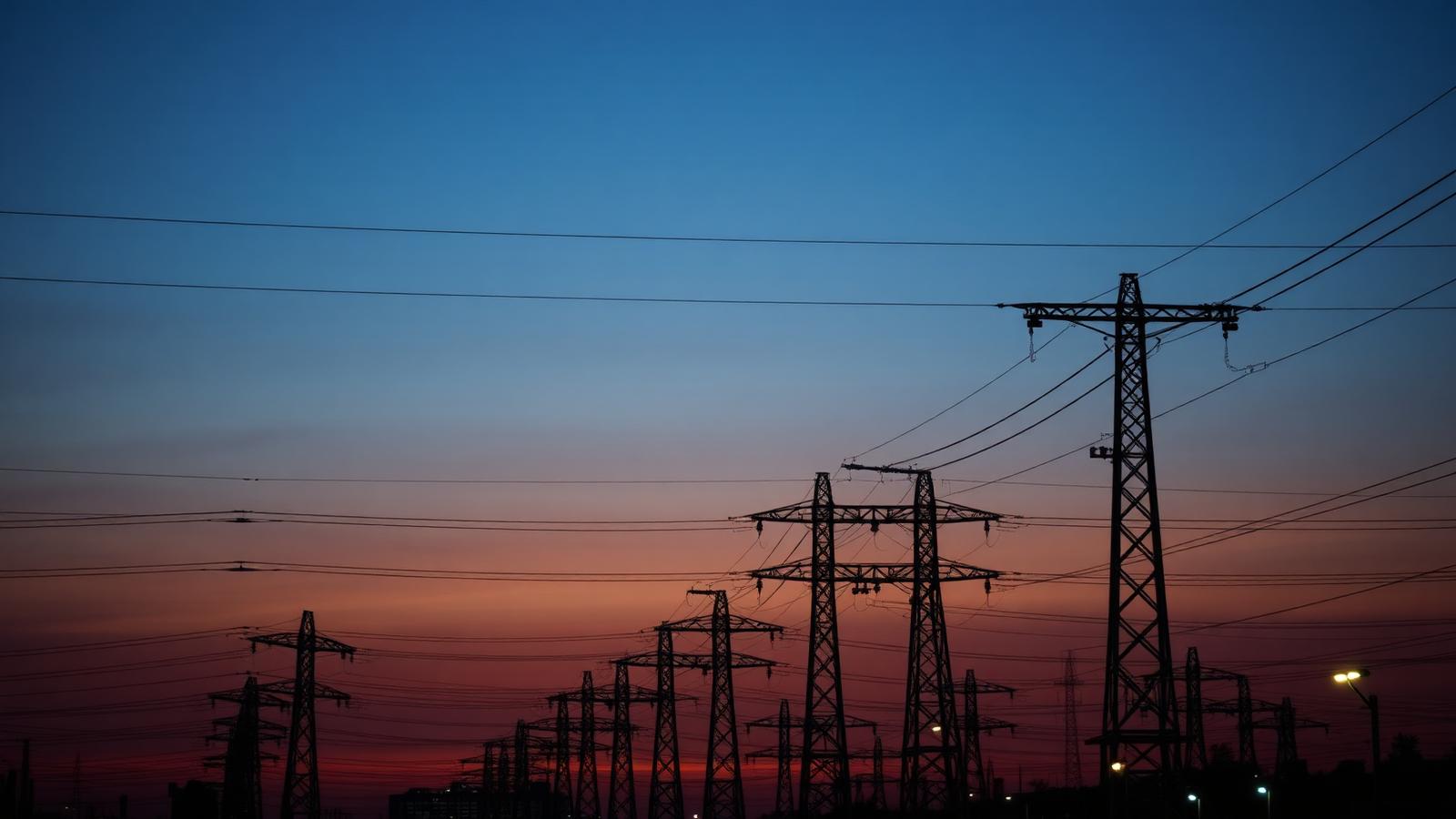
Artificial Intelligence and Machine Learning Applications for MV/LV Distribution Networks
Birchwood Hotel & O.R. Tambo Conference Centre, Boksburg, Johannesburg — or attend online
Accredited with ECSA — 2 CPD points.
About this programme
Renewable penetration, distributed generation, EVs, battery storage and smart metering have made MV and LV distribution networks materially more complex to plan, operate and maintain. Artificial intelligence and machine learning are now practical tools for that complexity — not research curiosities.
This two-day programme (16 hours) bridges AI theory and real utility practice: predictive analytics, automated fault diagnosis, load forecasting, energy optimisation, condition monitoring and real-time network control, built on data you already generate through SCADA, smart meters, DMS, GIS and IoT sensors.
Delegates work through supervised, unsupervised, deep and reinforcement learning with case studies and demonstrations on industry-relevant datasets using Python, MATLAB and cloud-based AI environments. By the end, delegates can identify AI opportunities in their networks, build load forecasting and fault classification models, design asset-health frameworks, and set out a credible utility digital transformation roadmap that accounts for data governance, cybersecurity, regulation and ROI.
Course content
The workshop programme, day by day.
Foundations, data and forecasting
- Module 1 (1 hr) — AI and ML in power systems: evolution, Industry 4.0 and smart grids, digital transformation of utilities, AI versus conventional engineering approaches, global adoption case studies
- Module 2 (1.5 hrs) — Data sources in MV/LV networks: SCADA, smart metering infrastructure, DMS, GIS, PMUs and IoT sensors, data quality challenges, preprocessing and cleaning
- Module 3 (2 hrs) — Machine learning fundamentals: regression, decision trees, random forest and SVM; K-means and hierarchical clustering; ANNs, CNNs and LSTMs; building a simple ML model in Python
- Module 4 (2 hrs) — AI-based load forecasting: short, medium and long-term forecasting with ANN, LSTM, SVR and XGBoost; municipal feeder case study; practical forecasting exercise
- Module 5 (1.5 hrs) — Energy consumption analytics and smart meter intelligence: customer segmentation, demand pattern recognition, non-technical loss and energy theft detection, revenue protection
Diagnostics, assets, DERs and implementation
- Module 6 (2 hrs) — AI-based fault detection and diagnosis: distribution faults, pattern recognition, event classification and fault location using Random Forest, SVM, CNN and deep learning; MV feeder case study and model development
- Module 7 (2 hrs) — Predictive maintenance and asset management: asset health index, remaining useful life, transformer health monitoring, cable degradation prediction, switchgear condition monitoring; regression, neural networks and ensemble learning
- Module 8 (1.5 hrs) — Renewable energy and DER management: solar PV and wind forecasting, battery storage optimisation, voltage regulation, hosting capacity assessment; reinforcement learning and optimisation algorithms
- Module 9 (1 hr) — AI for grid reliability and resilience: reliability indices, outage prediction, self-healing networks, predictive outage analytics and extreme weather prediction
- Module 10 (1 hr) — Implementing AI in utilities: AI project lifecycle, data governance, cybersecurity, regulatory considerations, ROI, change management and the adoption roadmap
Who should attend
- Electrical Engineers & Professional Engineering Technologists
- Utility, Municipal Distribution and Network Operations Engineers
- Asset Management Specialists & Energy Consultants
- Smart Grid and Renewable Energy Specialists, Researchers & Graduate Engineers
Ready to elevate your team's capability?
Request a proposal, book a facilitator, or schedule a discovery call. Our advisors respond within one business day.