
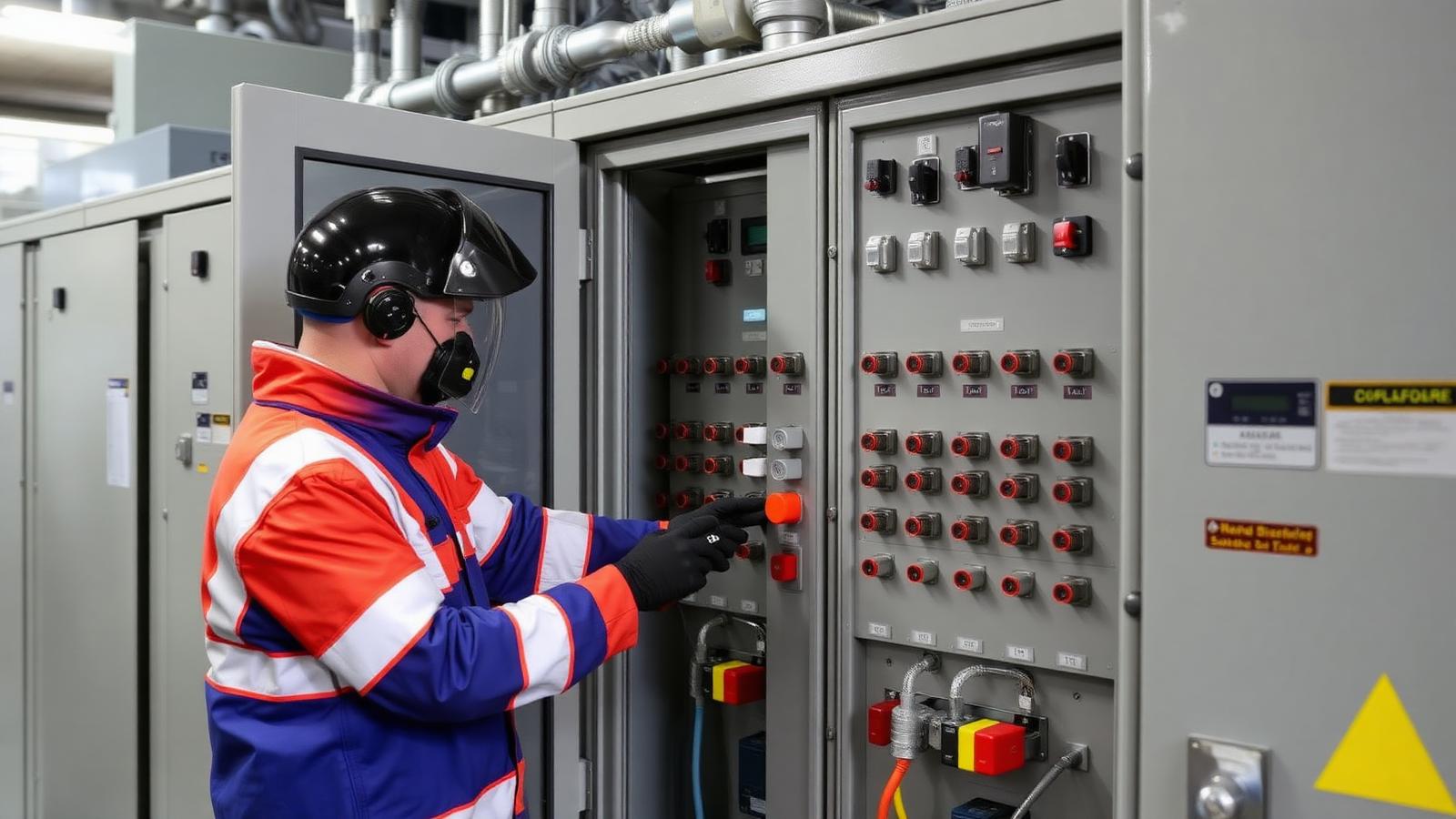
MV Switching Operations & Safety Procedures
Birchwood Hotel & O.R. Tambo Conference Centre, Boksburg, Johannesburg — or attend online
Accredited with ECSA — 2 CPD points.
About this programme
One incorrect switching operation can mean catastrophic failure — or worse. Most workplace incidents on HV/MV systems stem from non-compliance with operating regulations, incorrect switching and inadequate supervision, with consequences ranging from equipment failure and arc flash to serious injury or death.
This two-day technical masterclass delivers a comprehensive, practical grounding in the operating regulations and safety procedures governing HV/MV switching, linking, phasing and earthing — preparing delegates for HV authorisation.
By the end, delegates will understand the regulations and standards governing electrical safety at work, HV, MV and LV statutory requirements and safe operation, HV switching operations and methodology for switching, linking, safety testing and earthing, and the work permit system including exceptions to the general rules.
Attend face-to-face at Birchwood Hotel, Boksburg, or join live online from anywhere — the same expert instruction and the same certification.
Course content
The workshop programme, day by day.
Standards, safety equipment and access control
- Module 1 — Introduction: standards and regulations (SANS 10142, OHS Act, SANS 724, NFPA 70E, IEEE 1584); arc flash and shock hazards — electric arc and arc blast characteristics, shock hazard, effects of current on the body, hazard risk categories
- Module 2 — OHS Act, regulations and standards on safety and switching: OHS Act; electrical, general machinery and safety regulations; HV safety equipment — golden safety rules, PPE, padlocks and warning signs, voltage detectors, earthing and short-circuiting systems
- Module 3 — Live chambers, prohibited and restricted areas: access control — locking of doors and gates, admittance of persons, barricading, supervision; working procedure for safe access to, and work in, live chambers, prohibited and restricted areas
- Module 4 — Keys for substations and restricted HV areas: key control — authorised key holders, issue and recording, marking and types of safety locks; substation locking — master key hierarchy, busbar changeover locking, surrender or loss of keys
Earthing, switching, permits and safety procedure
- Module 5 — Isolating and earthing: isolating apparatus, static charge, effective vs. non-effective earthing, portable earthing; requirements for earthing overhead lines, busbars, transformers and metal-clad switchgear
- Module 6 — Switching operating principles and instructions: responsibility areas, communication, isolation and restoration of power; role of the control officer, operating instruction forms and handover of lines/apparatus
- Module 7 — HV switching work permit system: why, when and who issues a work permit; sections of the permit system; steps in issuing a permit and clearance before returning apparatus to service
- Module 8 — Abnormal conditions and exceptions to the general rules: emergency switching, local control centres and officer duties; work near live conductors, drop-out fuse isolators, piggyback systems and total substation isolation — plus assessments
Who should attend
- Electrical Engineers & Technicians
- Design Engineers
- Project Engineers
- Consulting Engineers
- Electricians
- Maintenance Engineers & Supervisors
Ready to elevate your team's capability?
Request a proposal, book a facilitator, or schedule a discovery call. Our advisors respond within one business day.